

By opting in you agree to receive emails from us and our affiliates. Your information is secure and your privacy is protected.
Investing
09-04-2026 11:51
0 Views
China car export growth hits 73.7% despite regional disruptions
China’s auto industry saw a sharp acceleration in export growth in March despite disruptions arising from the conflict in the Middle East.
Chinese carmakers have become increasingly dependent on global markets to offset a prolonged slump in domestic demand.
According to data released by the China Passenger Car Association on Thursday, exports rose 73.7% year-on-year to nearly 700,000 vehicles in March.
This marks a notable increase compared to the 54.1% growth recorded during the first two months of the year, indicating strong momentum in overseas demand.
Cui Dongshu, secretary-general of the association, highlighted the scale of this expansion, stating, “Car exports have entered a stage of super high growth, beating our expectations.”
The domestic market faces a sustained decline
While exports provided a bright spot, domestic sales continued to weaken.
Vehicle sales within China fell 15.2% year-on-year to 1.67 million units in March, marking the sixth consecutive month of decline.
The downturn reflects a combination of factors, including rising fuel prices, which have dampened demand for conventionally fuelled vehicles.
At the same time, electric vehicle sales have been impacted by reduced government incentives and a broader slowdown in economic recovery.
Sales of combustion engine vehicles dropped 15.7% in March, a sharper decline than the 13.4% fall recorded during the January–February period.
Although China has capped domestic fuel price increases to mitigate the impact of surging oil prices driven by the Middle East conflict, the measure has not been sufficient to revive demand.
EV slowdown and inventory pressures weigh on the market
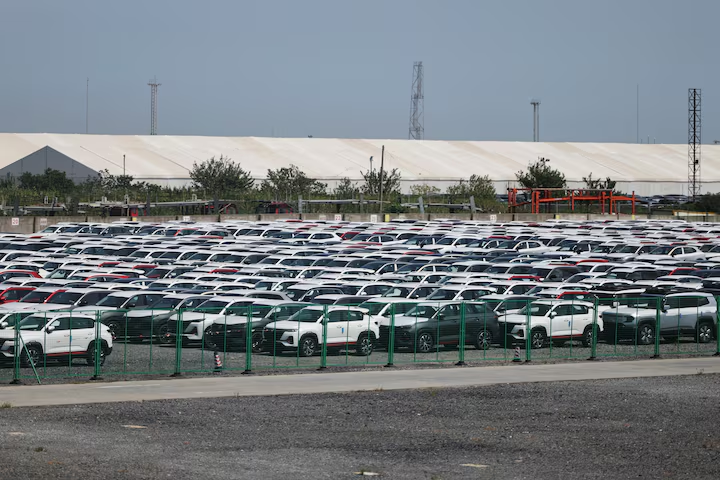
The domestic market is also facing mounting pressure from rising inventories.
According to media reports, Dealers are struggling with unsold stock, as reflected in an inventory-levels index that edged higher last month.
Consumer interest in new EV purchases has weakened, particularly following the reduction of incentives, including the expiration of a purchase tax exemption.
Data indicate that sales of new energy vehicles, including EVs and plug-in hybrid electric vehicles, declined 14.4% year-on-year in March.
This slowdown comes amid intense competition within the domestic market, further squeezing margins and sales volumes.
BYD sees overseas growth amid domestic challenges
Amid this challenging environment, leading EV manufacturer BYD reported its seventh consecutive monthly decline in domestic sales in March.
The company has been affected by the broader slowdown in EV demand within China.
However, the company continues to benefit from strong growth in overseas markets, particularly in Europe, where rising fuel prices have supported demand for electric vehicles.
BYD executives expressed confidence in their international expansion strategy, stating that they expect to sell more than 1.5 million vehicles overseas this year.
Export strength offsets domestic weakness
Overall, China’s automotive sector is increasingly relying on export markets to sustain growth as domestic demand remains under pressure.
The sharp rise in exports underscores the industry’s ability to tap into global demand, even amid geopolitical disruptions and logistical challenges.
At the same time, persistent declines in domestic sales, coupled with inventory build-up and reduced policy support for EVs, suggest that the sector’s recovery at home may take longer to materialise.
The post China car export growth hits 73.7% despite regional disruptions appeared first on Invezz
Other news

09-04-2026 11:51