

By opting in you agree to receive emails from us and our affiliates. Your information is secure and your privacy is protected.
Investing
05-04-2026 11:47
2 Views
India’s AC boom isn’t here yet: why cooling stocks are lagging

Despite scorching summers and rising temperatures across India, air conditioner makers like Voltas and Blue Star have struggled to translate long-term potential into consistent stock performance.
Over the past year, Voltas shares have declined about 8%, while Blue Star has fallen nearly 28%. This underperformance comes at a time when India’s AC penetration remains just 10%, far below global benchmarks.
While the long-term opportunity is widely acknowledged, a mix of cyclical and structural challenges continues to limit sustained growth.
A seasonal business that fails to sustain momentum
Air conditioner demand in India is heavily skewed toward the summer months, making earnings highly volatile and dependent on weather patterns.
Setting the context for this volatility, Harsh Thakkar, Research Analyst at SAMCO Securities, highlights how even supportive policy changes failed to translate into consistent demand due to weather disruptions.
“Even after the GST cut raised hopes of a demand revival, unseasonal rains and an early winter led to weaker-than-expected sales, disrupting the critical peak cycle. This resulted in inventory build-up and discounting, limiting earnings recovery for the fiscal.”
This has weighed on profitability. As a result, AC stocks tend to see short-lived rallies during peak summer but struggle to maintain investor interest beyond the season.
India had cut tax rates on various consumer items in 2025 to spur domestic demand following high US tariffs, but the impact on AC demand remained uneven.
Cost pressures are squeezing margins
Thakkar pointed out that rising input costs have further complicated the growth story for AC manufacturers. Key raw materials such as copper and compressors, along with higher compliance costs from stricter energy efficiency norms, have pushed up production expenses.
Explaining the margin pressure, Thakkar notes that pricing power remains limited despite attempts to offset rising costs.
“While companies have taken 5–15% price hikes, intense competition from global and domestic players limits full cost pass-through.”
This dynamic has led to gross margin compression, with companies forced to absorb part of the cost increases. Additionally, aggressive promotions during weak demand periods further erode profitability, the analyst added.
Blue Star’s management, in a January earnings call, echoed similar concerns, indicating that despite GST reductions, cost pressures from energy label changes, commodities, and exchange rates could result in a net price increase of about 10% for consumers.
Affordability constraints are slowing adoption
Air conditioner affordability remains a key barrier—especially in price-sensitive markets.
Providing insight into demand dynamics, Thakkar explains how inflation is influencing consumer behavior.
“Inflation driven by geopolitical factors (energy, logistics, currency) has increased AC prices, making entry-level products less accessible for price-sensitive consumers.”
This has particularly impacted first-time buyers in Tier-2 and Tier-3 cities, delaying purchase decisions, he noted.
He added that while financing options and policy support offer some relief, inflation could limit short-term demand elasticity.
Demand is closely tied to economic cycles
Beyond weather and pricing, the AC industry’s fortunes are closely linked to broader economic activity—especially real estate and infrastructure development.
Shailesh Saraf, Managing Director at Dynamic Equities, underscores this cyclical nature by linking AC demand directly to economic growth. He explains that slower economic activity over the past year has weighed on the sector.
“What typically happens is that when the economy is not doing well, overall activity slows down—new factories, new buildings, and infrastructure projects all get affected. As a result, demand for air conditioners also declines. This is largely an economic or cyclical business.”
Saraf adds that the market structure itself is not the issue. With limited major players, weak performance reflects demand conditions rather than competitive intensity.
A hotter summer may help—but not fix everything
The near-term outlook appears more favorable, with the India Meteorological Department forecasting above-normal heatwave days across several parts of the country between April and June.
Framing the potential upside, Thakkar points to strong seasonal demand expectations.
“A hotter summer is a strong near-term catalyst and can drive sharp volume recovery… with expectations of 15–20% growth in the RAC segment.”
However, he also cautions that sustainability depends on more than just weather. Inventory management, pricing discipline, and structural demand expansion will be critical in determining whether this momentum can continue beyond the peak season.
Saraf is more cautious, arguing that without a broader economic recovery, even extreme weather may not significantly alter the long-term trajectory of the sector.
“A hotter summer alone may not make a significant difference. If the economy is weak, new business generation remains limited. That’s crucial. Demand for ACs is directly linked to new construction and real estate activity,” he added.
The long-term opportunity remains intact
Despite near-term headwinds, the structural growth story for India’s AC market remains compelling. Low penetration levels, rising temperatures, and increasing urbanization provide a strong foundation for future demand.
Thakkar said demand destruction due to inflation and affordability concerns is “likely to be limited rather than structural.”
“Moreover, ACs are increasingly seen as a need-based product due to rising temperatures, not discretionary.”
Mukundan Menon, Managing Director of Voltas Ltd, said at an industry event that India’s residential AC sales could double to 30 million units annually by 2030 from about 15 million units at present.
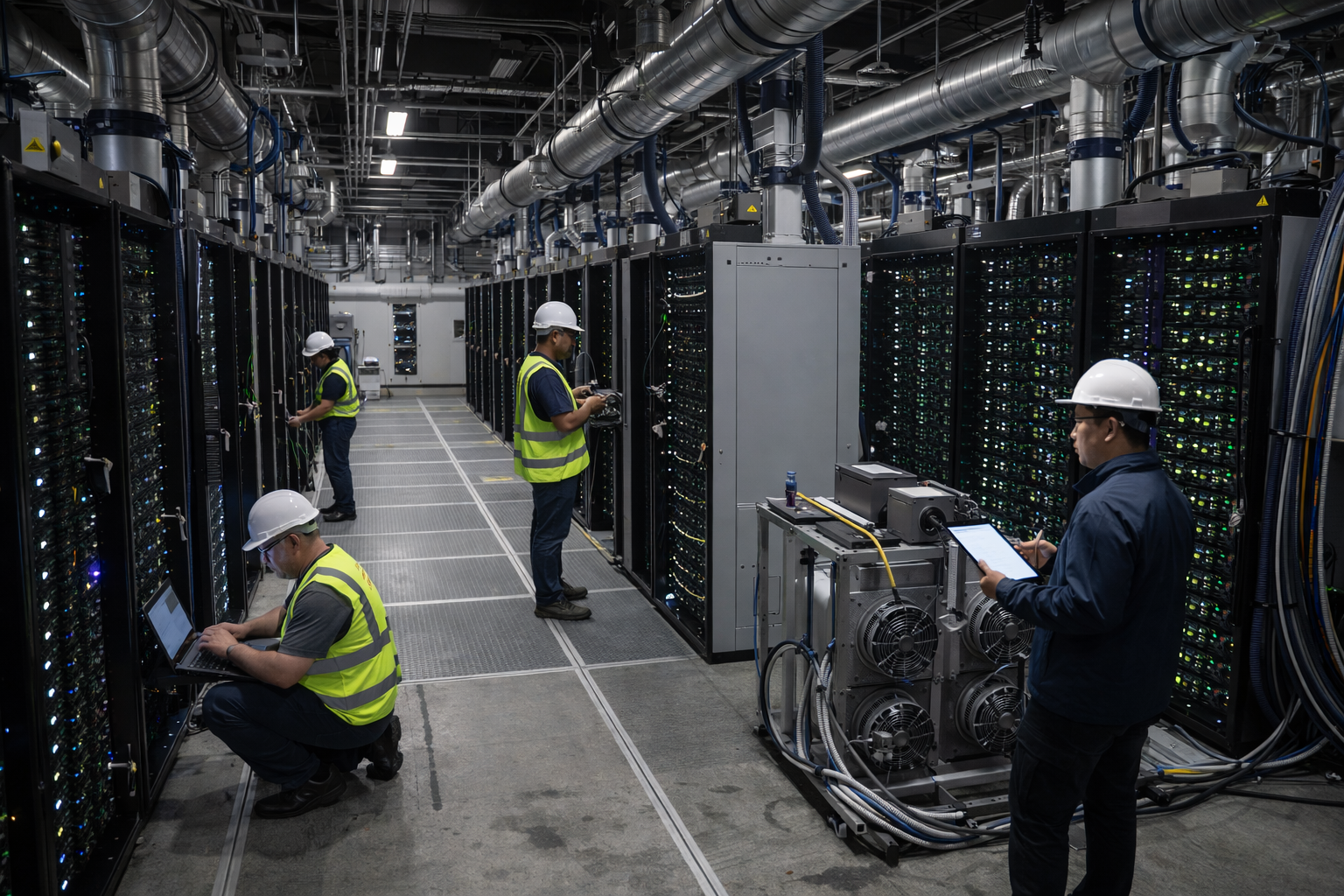
At the same time, companies like Blue Star are expanding into high-growth segments such as data centers and semiconductor infrastructure, which offer more stable and high-value opportunities compared to the seasonal room AC business.
For now, however, the disconnect remains clear: while India’s need for cooling is rising rapidly, the ability of AC companies to convert that demand into consistent, year-round earnings growth is still evolving.
Until that gap is bridged, AC stocks are likely to remain cyclical plays—driven more by summer heat than by structural momentum.
The post India’s AC boom isn’t here yet: why cooling stocks are lagging appeared first on Invezz
Other news

05-04-2026 11:47